
Ore identifier by photo
Compare a metallic rock or mineral by photo. Explore iron, copper, lead and zinc ores, their stains and lookalikes such as slag, then ask a follow-up.
- Metal ores & metallic minerals
- Explains each match
- 3 free identifications per day
Upload ore sample photos
Drag your photos here, or choose a file to begin.
JPG, PNG, WebP or HEIC · Up to 3 photos · 40 MB each · You can also paste a photo
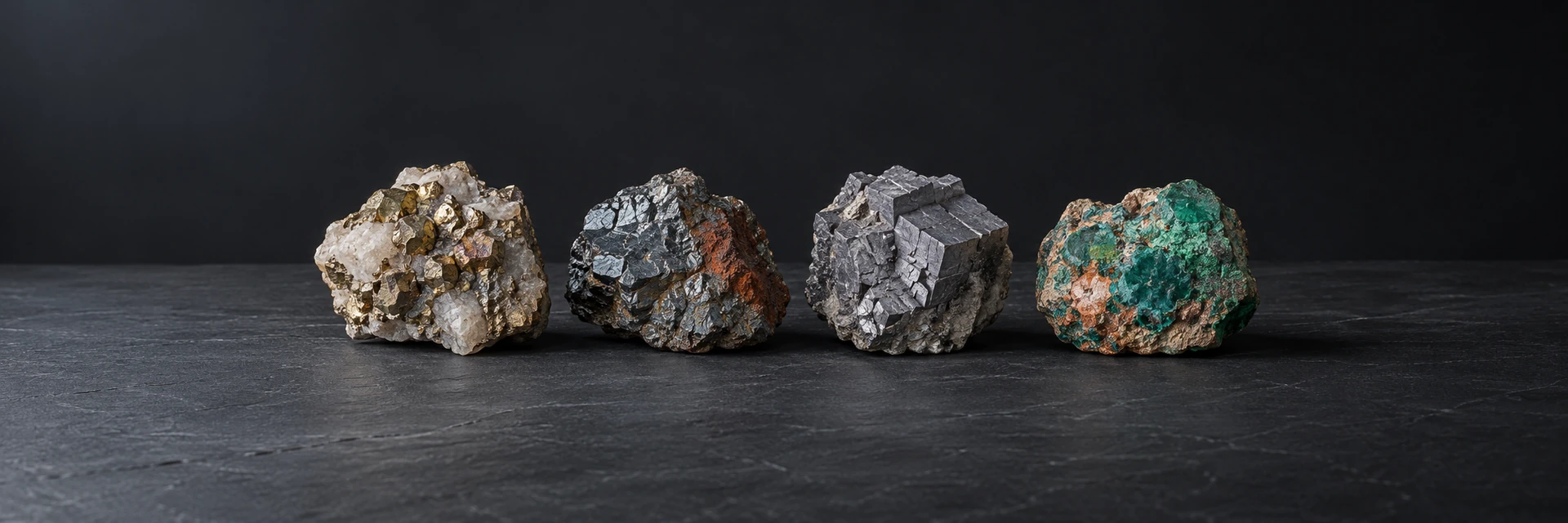
Chalcopyrite with sphalerite · photo by James St. John, CC BY 2.0 · Resized and converted to WebP.
- 01
Upload Photos of One Ore Sample
Add one to three views of an ore sample: whole sample beside a coin, close view of a fresh-looking surface and close view of any crystals or stains. JPG, PNG and WebP files are supported, up to 40 MB each. A location and your own observations are optional.
- 02
Review Matches and Evidence
A result presents a suggested name alongside visible clues, limitations and possible alternatives. Read those explanations together. Compare the explanation with your own photographs and leave the name open when the visible evidence does not distinguish the candidates.
- 03
Ask a Follow-up Question
Use the available follow-up to ask about lookalikes, typical properties or care. The reply stays with that specimen. When you want to investigate another find, start a new identification with its own photos.
Photo-based identification can suggest possible matches, but it cannot definitively confirm a specimen’s actual composition.
Keep exploring
Identify Another Rock, Try a Sample, or View Your History
Choose an identification, a sample walkthrough, or your saved history.

Sample walkthrough
Try the chalcopyrite with sphalerite photo and review its result.
Chalcopyrite with sphalerite · photo by James St. John, CC BY 2.0 · Resized and converted to WebP.
Photo guide
Get practical tips for showing shape, surface details and different angles.
Read the guidePhoto guide updated
How to use the ore identifier
The ore identifier compares a metallic rock or mineral with the ores of iron, copper, lead and zinc, and with the stains, coatings and slag that look like ore. Upload one to three photos of the same sample: the whole sample beside a coin, a close view of a fresh-looking surface, and a close view of any crystals or stains. Then choose where it was found: a mine dump or prospect, an outcrop or road cut, bought or inherited, or not sure.
The result lists possible matches, the visible clues behind each one, the lookalikes that still fit, and what the photos could not settle. It ends with a follow-up question you can answer or ask about, most often whether the sample feels heavy for its size, whether a fridge magnet sticks, or where it was found.
A metallic-looking sample may contain several minerals, an ordinary coating or manufactured slag. The ore identifier describes the most visible material first and leaves unresolved areas open. The word ore in a page title or a seller’s label does not establish metal content or economic significance.
Metallic or earthy luster: what the ore identifier checks first
Luster is how a surface reflects light. A metallic luster looks like polished or tarnished metal, opaque and gray, black or brassy, as in galena, pyrite, chalcopyrite, magnetite and most hematite. An earthy luster is dull and powdery, which fits goethite, bauxite and many weathered crusts. Sphalerite looks resinous, like dark honey, and malachite silky or velvety.
After luster come the color and tarnish of a fresh surface, crystal shape or cleavage, stains and coatings, and the host rock. Weathering hides the true color; the Missouri Geological Survey notes that weathered galena turns dark gray to black. So photograph an existing broken face or crystal, in daylight without flash, beside a coin.
Iron ores and gossan
Hematite is steel-gray to black, kidney-shaped or massive, often with a red-brown tint or red earthy patches. Magnetite is black, heavy and granular, sometimes in eight-sided crystals, and a fridge magnet may stick to it. Goethite, which may occur in mixtures called limonite, is brown to yellow-brown, earthy or grape-like. Siderite forms tan to brown curved rhombs, and red jasper banded with silvery hematite is banded iron formation.
Pyrite forms brassy cubes, but it is a sulfur mineral and rarely mined for iron. A rusty, porous rock full of small boxlike cells over a vein is gossan, the weathered cap of a sulfide deposit. A photo cannot show what metals, if any, remain below it.
Copper ores and green and blue stains
Chalcopyrite is brass-yellow with blue, purple or red tarnish. Bornite is bronze on a fresh face with a peacock purple-blue tarnish, and chalcocite is dark gray and sooty. Native copper is salmon-red to brown metal, wiry, branching or in irregular masses, often with a green crust. Cuprite is dark red, glassy to earthy.
Weathered copper minerals leave bright stains. A green banded or velvety crust fits malachite, deep blue fits azurite, and an opaque, soft-looking blue-green fits chrysocolla. Green or blue on a rock points the ore identifier toward copper minerals, though a thin stain may hold very little copper.
Lead, zinc and other metal ores
Galena is bright lead-gray, in cubes or masses that break into stepped, square-cornered pieces. The Missouri Geological Survey calls it the principal lead ore mineral and notes it is about 7.6 times as heavy as the same volume of water. Sphalerite, the main zinc ore, is resinous yellow, brown, red or black with many small cleavage flashes, and it often grows with galena. Cerussite forms white to gray, very bright, heavy crystals.
Cassiterite, a tin ore, is brown-black, very heavy and very bright. Wolframite, a tungsten ore, forms black, heavy, flat blades, and stibnite, the main antimony ore, gray radiating needles. Black grains in green serpentinite fit chromite, red-brown rock of pea-like grains fits bauxite, an aluminum ore, and bright red fits cinnabar, a mercury ore. Silver-white striated prisms fit arsenopyrite, an arsenic mineral.
For a crystal that does not look like an ore, try the mineral identifier.
Ore identifier lookalikes: slag, coatings and stained rock
Slag is a glassy waste product of smelting. A Washington University in St. Louis meteorite researcher notes that it often holds gas bubbles, can contain leftover metal that attracts a magnet, and is used in road building and landscaping gravel. A coating covers only the outside, so the ore identifier looks for the edge where it meets plain rock.
What you see | What it may point to | Photo that helps next |
|---|---|---|
Glassy, bubbly, rusty lump with metal beads | Slag (smelter waste, manufactured) | Close-up of the bubbles beside a coin |
Black sooty coating or fern-like branches | Manganese oxide coating or dendrites | The edge where the coating meets plain rock |
Thin shiny black skin on ordinary rock | Desert varnish | An existing broken edge that shows the inside |
Flaky golden or silver sheets that flash | Mica | Two photos from different angles |
Red or orange staining on plain rock | Iron-stained rock | The unstained side in daylight |
Rusty, porous, boxy rock over a vein | Gossan | A wider view of the outcrop and the vein |
Radioactive and toxic ore minerals
A black pitch-like material or a yellow coating has many possible identities; color alone cannot establish a uranium mineral or radioactivity. If a specimen’s label, source or a supported mineral comparison raises concern, avoid disturbing it and seek advice from a qualified local geology or radiation-safety service. A photograph cannot measure radiation or establish that storage and handling are safe. Do not break, grind or move a suspected hazardous sample just to obtain another view.
Some candidate minerals contain lead, arsenic, mercury or antimony. A visual suggestion is not a safety assessment. Avoid dust, tasting, heating, acids and destructive streak tests; keep unknown material away from children and wash hands after ordinary handling. Photograph an undisturbed sample rather than cleaning off a powdery coating.
Record a mineral comparison without claiming an ore grade
Keep an overview of the whole specimen with every detail photograph. A tiny brassy grain, a thin green stain and the surrounding host rock are different observations, even if all appear in one frame. State which area you want compared and use a scale in the same plane. Reflective surfaces may need a second lighting angle; a change in glare is not a change in mineral identity.
Record any locality or seller label as context rather than a measured result. An attractive crystal or a mine-related origin does not establish recoverable metal, a viable deposit or a sale price. A useful follow-up asks which visible feature separates remaining mineral candidates. Chemical composition, ore grade and economic value remain unresolved until appropriate independent sampling and analysis.
Grade, mine dumps and other ore questions
How much metal is in my ore, and is it worth anything?
The ore identifier cannot judge ore grade, metal content, purity or value from a photo. An assay laboratory measures them from a sample. A rock full of a real ore mineral can still hold too little metal to be worth mining.
Can I collect samples from an old mine dump?
Check with the land manager or claim holder before collecting. Mine openings, unstable ground and concealed shafts can be hazardous even when a site looks quiet. Stay away from openings and never enter an abandoned mine; an identification tool cannot assess site safety or collection permission.
How can I tell galena from hematite?
Cubic-looking cleavage and a lead-gray surface can support a galena comparison; earthy red-brown areas can support hematite among other possibilities. Lighting and weathering can hide these features. Photograph an existing surface without breaking it, and leave both candidates open if the images do not separate them.