
Silver identifier by photo
Compare a silver-colored item by photo. Explore marks, tarnish and wear to tell sterling from silver plate and other metals, then ask a follow-up.
- Sterling, plated & silver-colored
- Explains each match
- 3 free identifications per day
Upload silver-colored item photos
Drag your photos here, or choose a file to begin.
JPG, PNG, WebP or HEIC · Up to 3 photos · 40 MB each · You can also paste a photo
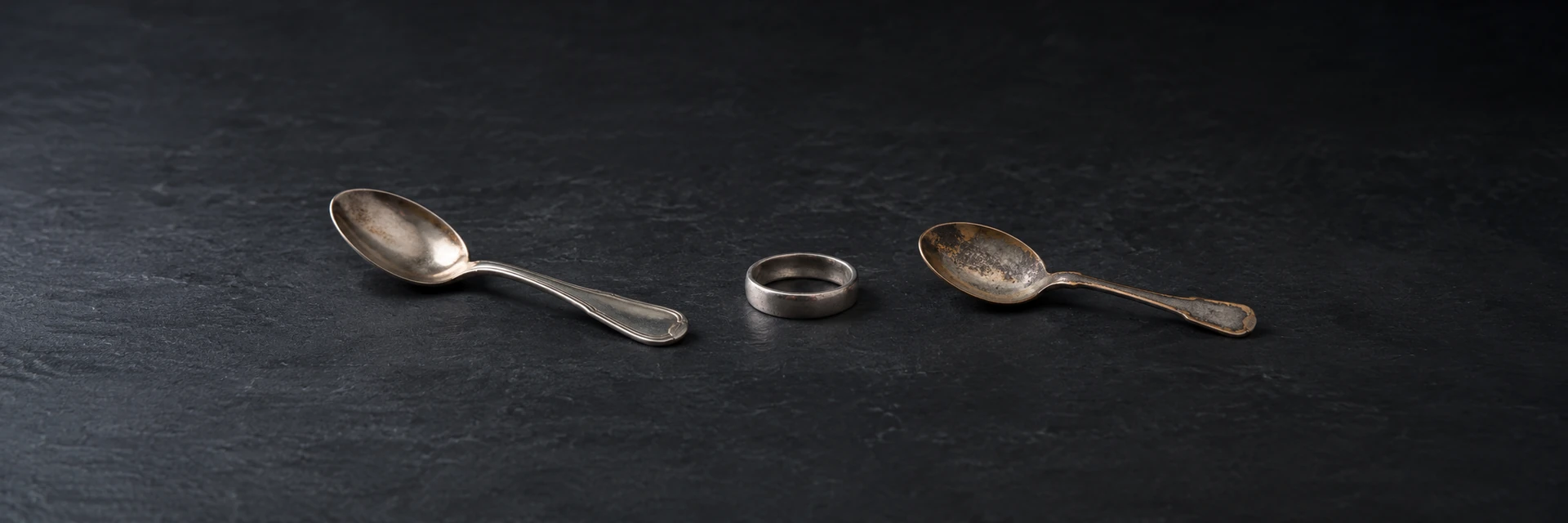
Silver spoon · photo by The Metropolitan Museum of Art, CC0 1.0 · Resized and converted to WebP.
- 01
Upload Photos of One Silver-Colored Item
Add one to three views of a silver-colored item: whole item in daylight, sharp close-up of every mark and close view of a worn edge or high point. JPG, PNG and WebP files are supported, up to 40 MB each. A location and your own observations are optional.
- 02
Review Matches and Evidence
A result presents a suggested name alongside visible clues, limitations and possible alternatives. Read those explanations together. Compare the explanation with your own photographs and leave the name open when the visible evidence does not distinguish the candidates.
- 03
Ask a Follow-up Question
Use the available follow-up to ask about lookalikes, typical properties or care. The reply stays with that specimen. When you want to investigate another find, start a new identification with its own photos.
Photo-based identification can suggest possible matches, but it cannot definitively confirm a specimen’s actual composition.
Keep exploring
Identify Another Rock, Try a Sample, or View Your History
Choose an identification, a sample walkthrough, or your saved history.

Sample walkthrough
Try the silver spoon photo and review its result.
Silver spoon · photo by The Metropolitan Museum of Art, CC0 1.0 · Resized and converted to WebP.
Photo guide
Get practical tips for showing shape, surface details and different angles.
Read the guidePhoto guide updated
How to use the silver identifier
The silver identifier compares photos of a silver-colored item, such as a spoon, a bracelet or a coin, and suggests what metal it may be. Upload one to three photos of the same item: the whole item in daylight, a sharp close-up of every mark, and a close view of a worn edge or high point. Then choose what it is: flatware or tableware, jewelry, a coin or bar, or not sure.
The result lists possible matches, such as sterling silver, silver plate, nickel silver or stainless steel, with the visible clues behind each one. It names the lookalikes still in play and says what the photos could not settle, which always includes silver content and value. A follow-up question comes last; answer it or ask your own. Whether a fridge magnet sticks and where the item was bought are the two most useful notes you can add.
Take the mark close-ups straight on, in daylight, with no glare; look under handles and bases, inside ring bands and on clasp tags.
Sterling, coin and continental silver marks
Marks carry the most weight, so the silver identifier reads them first and quotes them exactly. “925”, “Sterling” and “Ster.” claim sterling silver, which the Federal Trade Commission describes as 92.5 percent pure silver. “Coin” or “coin silver”, found on older American pieces, means 90 percent silver in the same FTC guidance.
European pieces often use numbers instead. 800, 830, 835 and 900 are common continental standards, 950 and 958 mark higher standards, and 999 or “Fine” means fine silver. A lion walking left in a shaped shield is the British sterling mark. Read nearby company names and symbols as additional context. A bare number does not establish the marking system or prove that the material meets its stated standard.
For a full row of British, Irish or continental hallmarks, use the silver hallmark identifier.
Silver plate marks and metals with no silver
Silver plate is a coating over another metal. Clearly readable EPNS, EPC, silver plate, silverplate, triple plate or quadruple plate can support that interpretation. A1, a place name such as Sheffield, or a missing hallmark alone does not establish the metal. Quote ambiguous letters and keep the full group visible instead of treating a familiar word as an assay.
Some names contain no silver at all. The Canadian Conservation Institute explains that E.P.N.S. stands for electroplated nickel silver, and that nickel silver, also called German silver, is a copper-rich alloy of nickel and zinc with no silver in it. Alpaca and paktong are trade names for similar alloys. Marks such as “Stainless”, 18/8 or 18/10 point to stainless steel.
Worn edges, tarnish and the silver identifier
Plating wears through first on high points: the backs of spoon bowls, fork tines, feet, rims and raised patterns. Copper-red or yellow brass showing there points toward silver plate. The conservation institute notes that silver is often electroplated onto copper and copper-nickel alloys, so a pink or yellow patch under a white surface is usually the base metal showing. The same color right through a worn area fits solid metal, silver or not.
Tarnish can add context, but it cannot establish silver content. The Canadian Conservation Institute describes thin silver tarnish as gold, blue or purple, becoming black as it thickens. Both sterling and a silver coating can tarnish, while polishing or a protective finish may leave either bright. Compare the mark, wear and construction together; a clean surface or a yellowish color alone does not identify an alloy.
Some silver objects combine several materials. Weighted bases and filled handles mean the gross weight is not the weight of silver, and a steel fitting can behave differently from the main body. A contrasting seam may be solder, a repair or a different component; it does not automatically prove that the whole piece is plated.
Coins, bars and US coin silver dates
For a coin, record the denomination, date, mint mark and edge before comparing it with an official issue reference. The Coinage Act of 1965 changed United States circulating coin specifications, but a date alone cannot authenticate a coin or establish every issue’s composition. Special collector issues, altered dates and replicas need separate checking. Keep a possible identification distinct from a verified metal-content claim.
Bars and rounds usually show a weight, a fineness such as .999 and a refiner’s name. The page reads the stamp but cannot weigh or authenticate a coin or bar.
Silver identifier lookalikes and the next photo
One drawer can hold all of these, so the result keeps more than one candidate when marks are hidden or worn.
What you see | What it may point to | Photo that helps next |
|---|---|---|
925, Sterling or Ster. with a maker’s name | Sterling silver claim | Straight-on close-up of the mark |
Readable EPNS, EPC or silver plate | Plated-ware marking; coating thickness unverified | Complete mark and naturally worn high points |
Copper-red or yellow metal on edges and feet | Silver plate worn through | Close view of the worn spot in daylight |
Nickel silver, German silver or alpaca | Nickel silver, which has no silver in it | Any other marks on the back or underside |
Bright gray, no tarnish, Stainless or 18/10 | Stainless steel | The mark, and whether a magnet sticks |
Dark tarnish and no marks at all | Silver-colored metal, unmarked | Edges and inner surfaces where a mark might hide |
Magnets, testing and what a photo cannot settle
If you already know how the item responds to a magnet, record exactly which part attracts it. Strong attraction may suggest a ferromagnetic base, core or fitting; a small clasp or blade does not establish the composition of the whole object. Non-attraction does not prove sterling because many other metals also fail this check. A photograph cannot measure this property, so the tool treats your note as an unverified observation.
Do not scratch, file, heat or use acid kits on the piece. Marks can be copied or misleading, and an apparently consistent mark still does not verify silver content, weight or value. A qualified jeweler or assay office can choose suitable tests; XRF is one method used by assay offices. Ask how coatings, mixed parts or a filled handle affect the interpretation rather than assuming a surface reading proves the composition of the entire object.
Keep the body, fittings and mark photographs connected
Use one overview to show where each close-up belongs. A stamp on a clasp may describe the clasp rather than the chain, and the handle of a knife can differ from its blade. Number the images and note whether a visible patch is on an edge, repair, join or separate fitting. Leave unreadable letters open instead of replacing them with a likely-looking maker name.
For a follow-up, compare the same naturally worn area in two ordinary daylight views. Reflections and polish residue can look like a second metal in one image. Do not create a new scratch to check the color underneath. Keep the seller’s description separate from the visible observations so an inherited label does not become proof of sterling or plate.
Common questions about silver marks
Is EPNS real silver?
Only on the surface. The letters stand for electroplated nickel silver: a thin layer of real silver over a copper, nickel and zinc alloy with no silver in it. The silver identifier names these pieces silver-plated.
What does quadruple plate mean?
It is a trade term on older American plated ware for a heavier silver coating than single plate. It still means plated, not solid silver.
My silver is not magnetic. Does that make it sterling?
No. Many non-silver metals do not attract a magnet, and a magnetic fitting may be only one part of a mixed-material object. Record where any attraction occurs and keep the identification provisional until suitable testing establishes the material.
Why does my silver have no marks?
Some older and handmade pieces were never marked, and marks can wear away or hide under a clasp or rim. An unmarked piece stays “silver-colored metal, unmarked” until a jeweler or assay office tests it.
Further reading
- Federal Trade Commission: Buying platinum, gold and silver jewelry, including sterling and coin silver marks
- Canadian Conservation Institute: Caring for metal objects, including silver tarnish, E.P.N.S. and nickel silver
- Birmingham Assay Office: Silver assay and hallmarking, plated-ware marks and XRF testing
- U.S. Government Publishing Office: Coinage Act of 1965, coin silver and clad coin specifications