
Identifying Michigan rocks starts with the part of the state where you found the specimen and the clue it actually shows. On the northern Lake Michigan shore, fossil coral is a useful comparison for a patterned gray pebble. In the Keweenaw, volcanic rocks and copper-bearing material give you a different starting point. Keep the regional context and the visible evidence in separate notes.
Michigan fossil corals and lakeshore rocks
| Candidate | Visible clues |
|---|---|
| Petoskey stone | Look for adjoining coral cups with a center and rays in several complete cells. A rough or dry face can show the boundaries more faintly. |
| Charlevoix stone | The local name refers to Favosites fossil coral. Its many small adjacent tubes can give a compact honeycomb impression. Compare cell size and detail in the center of a cell. |
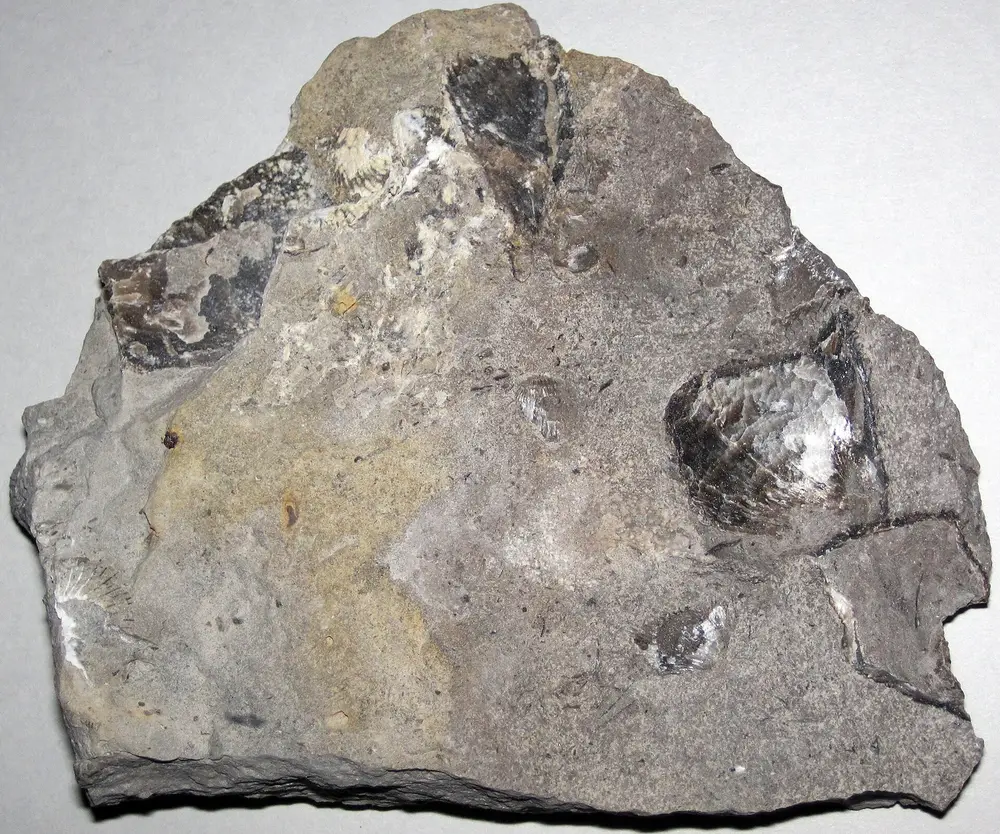
| Fossil-bearing limestone | Shells or separate fossil shapes may sit in a continuous pale host. A few rings or holes on a fragment leave room for other fossils or for weathering. |
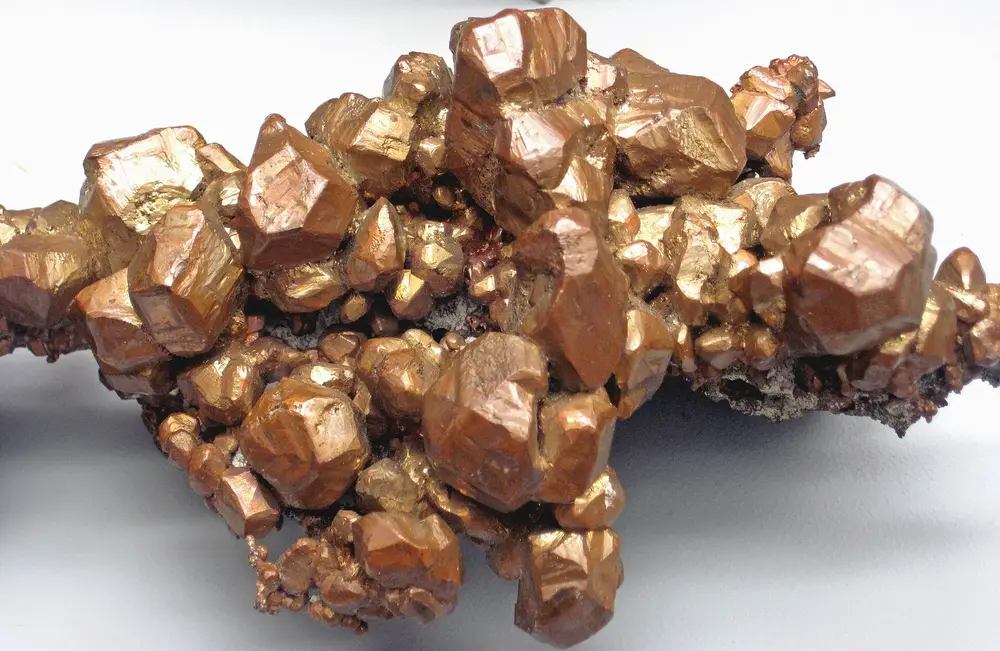
| Upper Peninsula volcanic rock | Inspect dark fine material for cavities, filled holes and veins. Photograph the surrounding rock even when one metallic patch stands out. |
Photo examples


Little Traverse Bay and the northern Lower Peninsula
Michigan EGLE describes the Petoskey stone as fossil colonial coral associated with Devonian rocks of the Traverse Group near Petoskey. On the Lake Michigan side, Little Traverse Bay and the shore between Petoskey and Charlevoix supply useful context for comparison. A loose pebble on a beach may have been moved by ice or water. The find location is useful evidence for the setting and cannot assign the pebble to a particular bed.
Start with a small cluster of complete cells. On a typical Petoskey pattern the rounded or polygonal cups sit beside one another and commonly show a central spot with fine lines radiating outward. A worn face may show only the centers. Find another patch with more of the cell wall still visible. If the pattern repeats across the edge, you have a stronger reason to compare a colonial fossil than if you can see just one ring.
For Charlevoix stone, Michigan EGLE uses the local name for Favosites, a different fossil coral. Compare the compact cluster of small tubes with the larger radial pattern you are looking for in a Petoskey candidate. Size depends on the specimen and the angle of the cut or worn face. Put a ruler beside the best patch and look for radiating lines in several cells before choosing between those labels.
Read other Lower Peninsula shoreline specimens
The Lake Michigan shore also exposes loose glacial sediment and sand. At Sleeping Bear Dunes, the National Park Service describes rock debris carried by ice and later sand shaped by wind. In this setting, neighboring cobbles can have different origins. If one pebble is speckled, another is layered and a third has shell fragments, record all three observations before trying to make one explanation fit the entire patch.
Michigan EGLE also records fossil finds beyond the Petoskey area, including localities toward the Lake Huron side. Fossil-bearing limestone can have crinoid fragments, shells, corals or a mix of shapes. Look for outlines that differ from the host rock. Several ringlike pieces scattered through a gray matrix should be compared with loose fossil fragments before being assigned to a coral colony.
A wet surface can bring out a faint pattern, especially on fossil limestone, but gloss can also hide small details. If the stone is already accessible and permitted to handle, compare a dry image with one that records how the pattern appears wet. Keep the camera angle close to perpendicular for the cell pattern, then add an oblique view to show whether cavities have depth.
Some Michigan fossils are easier to compare by shape than by color. A short chain of linked openings, a collection of separate round pieces and a close grid of tubes suggest different structures. Look for several intact examples of the same shape in one area and measure their spacing. If a mark repeats only along one thin line, inspect where that line crosses the rock. It may record several fossils exposed by the same break.
Use a different shortlist in the Upper Peninsula
The National Park Service describes the Keweenaw’s volcanic flows and native copper deposits as part of the Midcontinent Rift story. A dark fine-grained cobble can be compared with basalt. Check whether its cavities are empty or have pale material in them. A filled hole, a narrow vein and a surface stain are three different observations. Look at where each feature meets the surrounding rock.
A bright metallic area is worth a close view with indirect light. Tarnish, surface staining and small reflective grains can change what you see. Mining and smelting also left materials such as waste rock and slag in parts of the region. Use the setting as context for natural and manufactured candidates. For photography, choose permitted public locations and avoid treating an industrial site or mine waste pile as an ordinary shoreline specimen source.
On the Upper Peninsula’s Lake Superior side, where the specimen came from still matters. The sandstone cliffs at Pictured Rocks and the volcanic bedrock of the Keweenaw illustrate different regional comparisons. A loose cobble can have been moved by ice and water, so take a close view of grain boundaries or cavities before naming it after a nearby outcrop.
Record the feature that makes the difference
When you compare two candidate photos, match the viewing angle first. A cross-section can show the interior of several neighboring coral tubes, while a view down the side can reduce them to long stripes. Both views belong with the same specimen. A small record with two angles and a scale can make it possible to compare the structure even if the outer surface has lost most of its detail.
Suppose your gray pebble from the northern Lower Peninsula has six or seven circular marks on one side. At first it could be a worn fossil coral, loose fossils in a rock or a surface with rounded pits. A close image of adjacent complete cells can show whether they share walls and whether rays run inward. A side image can reveal the shapes continuing into the rock. Record the group of clues that you can actually see.
Start with one frame of the whole pebble and one with a ruler beside the pattern. Add an edge image if there is a useful natural break. Keep the county or shore name with the photos and identify the feature you want to compare. The existing photo tools can help organize candidates. A very worn piece may stay under a broad fossil or rock group until a better surface is visible.
Access and collecting rules vary among shorelines, public land, parks and private property. Check the relevant manager before removing specimens. A location photo and a close image in place are often enough for a first comparison and preserve information about where the rock was sitting.