
Identifying Lake Superior rocks starts by separating the lakewide geology from the clues on a single stone. Compare nested bands, cavities and grain texture, and note which shore you were on. The same red pebble can have several plausible names, and bedrock, glacial deposits and loose beach material tell different parts of the story.
Lake Superior agate, volcanic cobbles and sandstone
| Candidate | Visible clues |
|---|---|
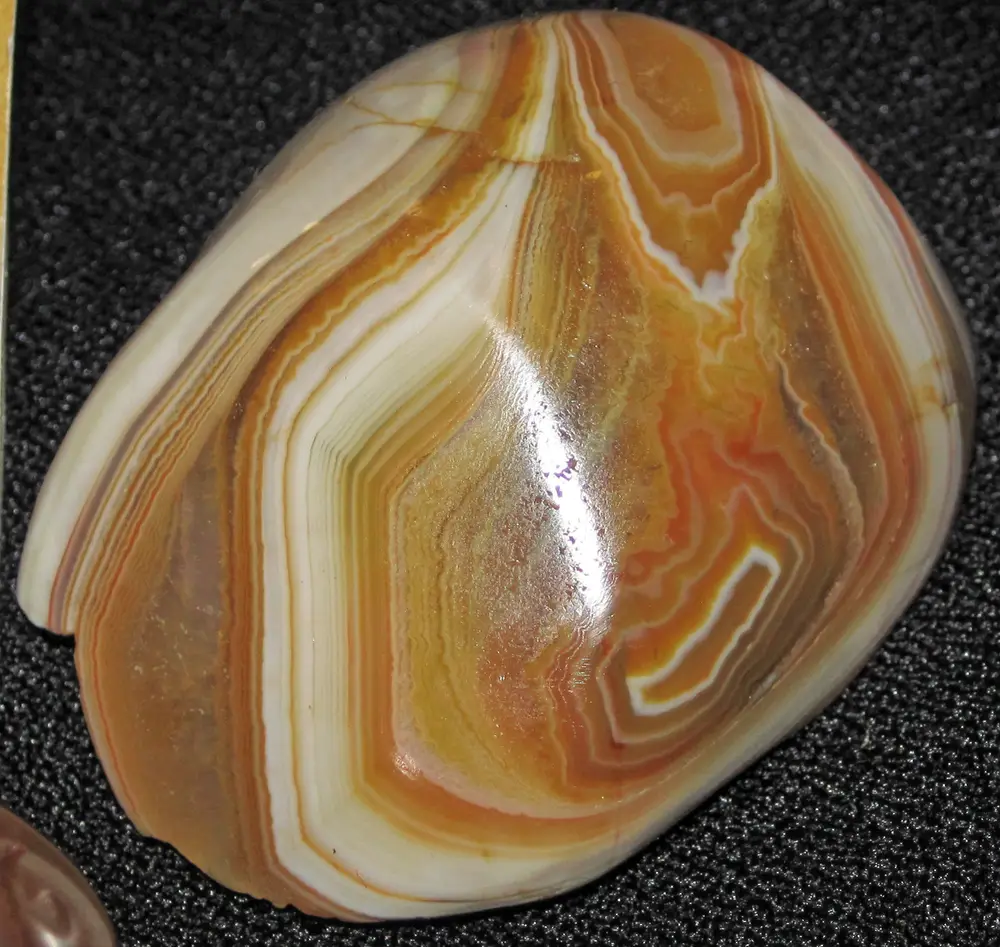
| Lake Superior agate candidate | Look for nested bands or repeated arcs and some translucency along an exposed edge. Iron can contribute red, orange and yellow colors. A rusty surface without visible bands gives little evidence on its own. |
| Basalt with cavities or fillings | Check for fine dark material around round holes. Pale material may fill some cavities. Compare the shape and texture of the surrounding rock before identifying the filling. |
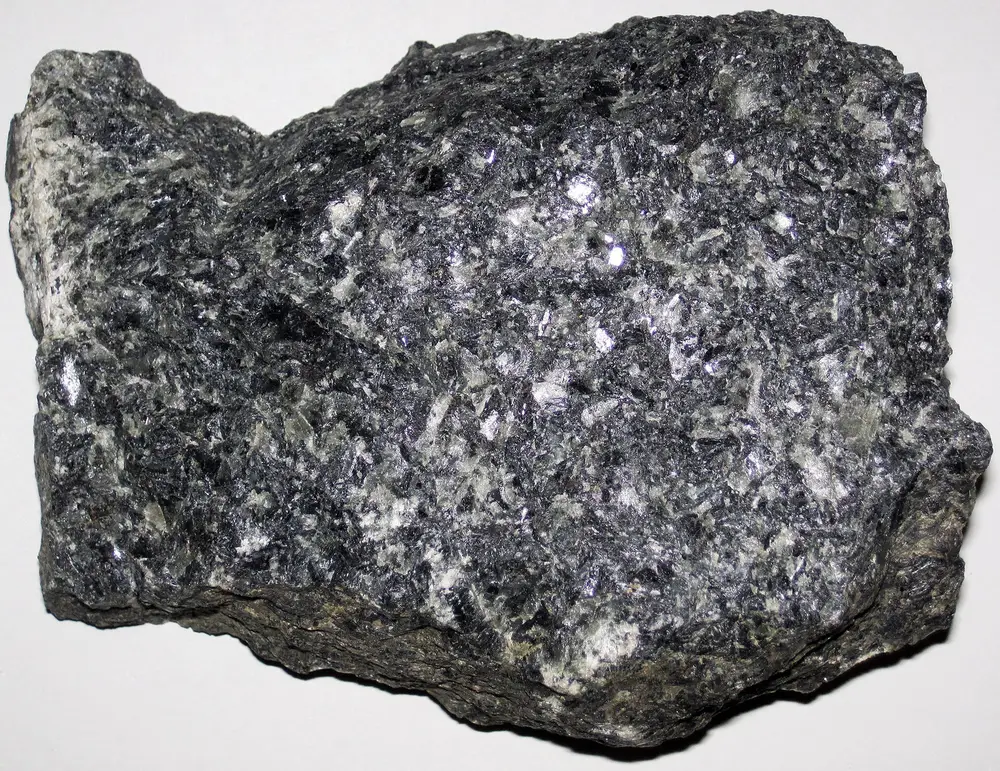
| Gabbro or other coarse rock | Look for distinct intergrown light and dark minerals. Grain size can help separate a coarse sample from a fine volcanic rock, but a close-up alone can make grain sizes hard to judge. |
| Sandstone | Look for sand-sized grains or changes in texture along bedding. A rusty or pink surface can also occur on several other rocks around the lake. |
Photo examples


Start with the rock’s texture, then use the shoreline
Rocks associated with the Midcontinent Rift include volcanic rocks and coarser rocks that cooled at depth. Sandstone is exposed along other stretches of the shore. Glaciers later carried loose material away from its source, and water can move it again. If a beach has pale grains, dark stones and iron-colored nodules in the same patch, record that mixture before assigning a name to each one.
A named shoreline is useful when you can connect it to a visible feature. If you saw the same cavities in an outcrop and several nearby cobbles, describe that match. A single loose pebble is a separate observation. If you are working from someone else’s photo, ask which shore and whether the specimen was loose, in bedrock or in gravel brought in for landscaping.
Compare known places around the lake
Keep the place names attached to the examples when comparing rocks from different shores. The Duluth gabbro image gives you a scale of visible texture, while the Apostle Islands sandstone gives you a different regional context. If you see a brown streak in either kind of sample, inspect whether it follows grain boundaries, a fracture or a continuous layer. Color alone has little power to connect a loose pebble to a particular shore.
In Minnesota, Gooseberry Falls State Park shows exposed basalt associated with the Midcontinent Rift. It is a useful regional example for dark fine-grained rocks. Compare the groundmass around a cavity with the rest of a specimen. In the Duluth area, documented coarse rocks such as the gabbro pictured here let you compare what distinct intergrown minerals look like at hand specimen scale.
In Wisconsin, the National Park Service describes Bayfield Group sandstones beneath the Apostle Islands and Bayfield Peninsula. A shoreline image of a layered cliff may show bedding well, while a loose fragment needs a closer look at the grains. At Michigan’s Pictured Rocks, sandstone cliffs also dominate the view, and mineral staining colors their surfaces. A red stripe on an individual piece can be staining, bedding or a separate band of material. Look at an edge to see how it relates to the rest.
The Keweenaw Peninsula of Michigan provides a volcanic comparison with its ancient lava flows and native copper history. Keep a whole-rock photo along with any close-up of a green or metallic spot. On the Canadian side, Ontario Parks describes wave-exposed bedrock at Lake Superior Provincial Park. A wide, permitted view at a place such as Agawa Bay can document the kind of shore you saw. A bedrock view and a pebble close-up answer different questions, and both are useful.
Distinguish iron color from agate banding
Minnesota DNR describes iron-rich coloring and several patterns in Lake Superior agate. Begin by tracing the boundary between adjacent colors. A sequence of arcs or angular rings that curve around an interior provides more information than the overall red color. A straight stripe crossing the specimen as a seam can have another explanation. Look along the edge where the stripes reach the side.
Some nodules retain a weathered outer surface and expose only a small interior patch. The outer color can differ from the bands inside. Hold an already thin, accessible edge against diffuse light if you can do so safely. Photograph an opaque area and the thinnest translucent area separately. A smooth, red, opaque pebble can stay in a broad silica or iron-stained rock comparison until you can see more.
Consider a dark cobble with pale circles. The dark matrix and pale features deserve separate notes. If the circles are limited to individual cavities, compare a volcanic rock with mineral fillings. If the whole loose piece has continuous curved bands, compare it with a nodule. A circle on one face may have a very different shape on the side, which is why the second view matters.
For a speckled cobble, include a scale in the same plane as the surface. A magnified image can make tiny crystals look as large as those in the gabbro reference. Compare whether the speckles have defined boundaries and appear across more than one face. If they form a few large patches in a fine background, record the two grain sizes separately. That description is more precise than calling the entire pebble coarse.
Keep a record that survives the next comparison
Take a photo of the shore setting from an established place. For the specimen, choose a whole-rock view with a ruler and a closer view of the best band, grain or cavity. Add an edge photo if the key clue disappears when you turn the rock. Include the shore name and whether the piece was wet. Lake water can make dark cobbles glossy and may make the color look stronger than it does when dry.
Suppose a reddish pebble from the Minnesota shore has a matte rind and two bright curves visible at a chip. Record those features first. If the curves repeat inside the stone and the edge transmits some light, agate deserves a closer comparison. If only the outside is red and the chip is granular, revisit sandstone or another stained rock. Keep both possibilities if the photos leave that question open.
Lake Superior spans different land managers and protected areas. Check the relevant rules before touching or removing specimens and take photographs in place where appropriate. The photo tool can help compare visible features, while the location record helps you decide which regional examples to read next. A useful result can be a rock group plus a clear note about which clue is still missing.
When two stones from the same beach look similar, label them in separate photos. A close crop of a band from one specimen can easily be confused with the full outline of another. Use the same background and lighting when possible.