
Identifying Oregon beach rocks gets easier when you record the stretch of coast and the kind of shore. A cobble at the foot of a basalt headland, a small nodule in a Newport gravel patch and a dark pebble on the southern coast call for different comparisons. Start with texture and edge clues, then use the local geology to judge which possibilities deserve a closer look.
Compare agate, jasper and basalt on the Oregon coast
| Candidate | Visible clues |
|---|---|
| Agate or chalcedony | Trace any nested bands and check a naturally thin edge against diffuse light. Rounded nodules may keep an opaque rind while exposing the interior on one side. |
| Jasper or chert | A dense, opaque pebble with a waxy or smooth broken face can fit either. Color and a single curve on a fracture leave room for other fine-grained silica-rich rocks. |
| Basalt cobble | Compare the fine dark groundmass with a worn side. Look for cavities or pale fillings where visible. Most diagnostic features are smaller than the outline of the cobble. |
| Sandstone or mixed coastal rock | Check for grains, alternating beds or several different materials within the piece. Use the southern coast bedrock context to keep plausible alternatives open. |
Photo examples
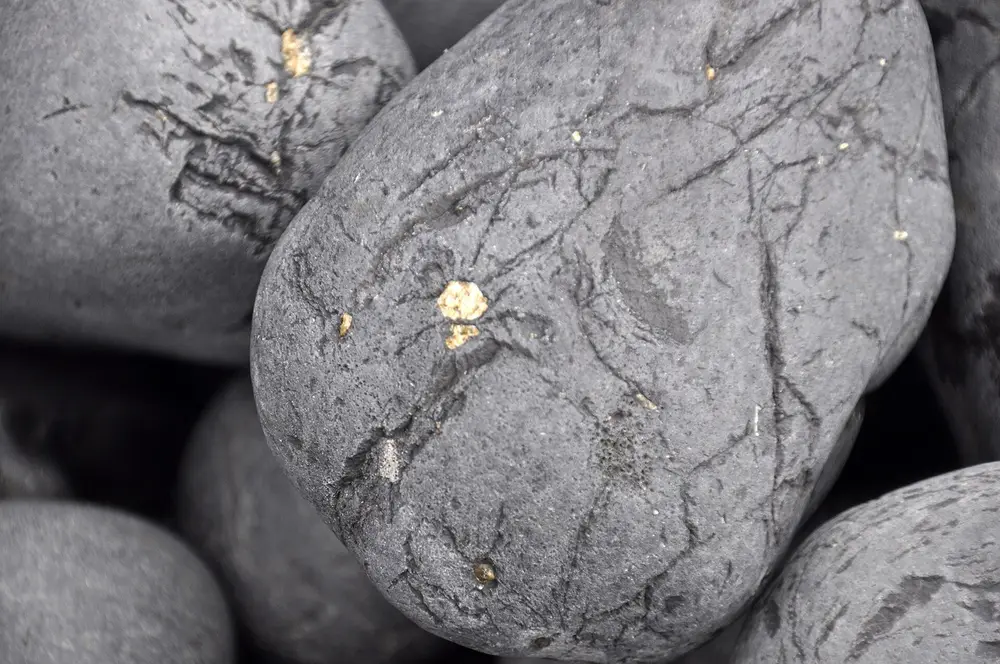

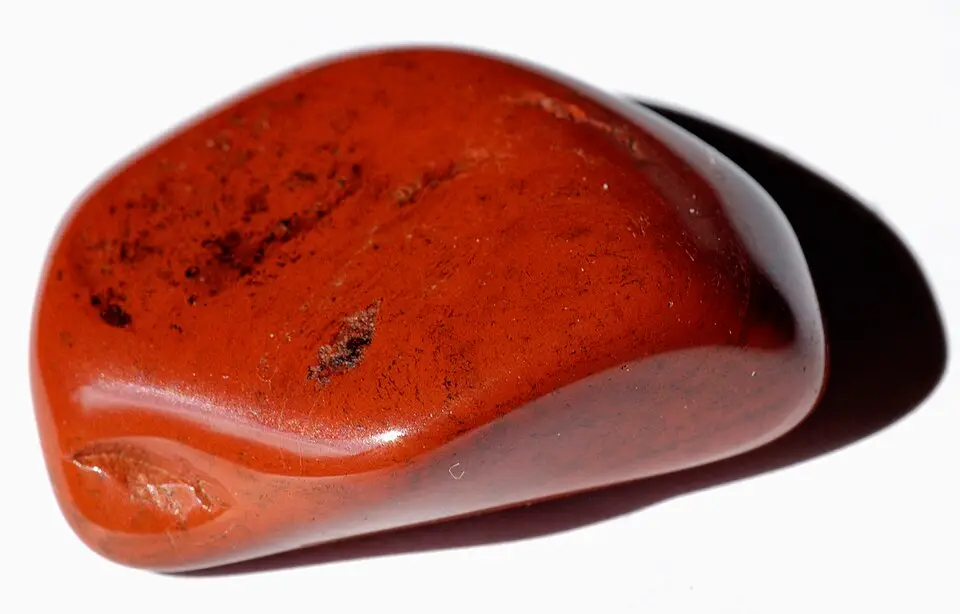

Newport and Yaquina Head show two different shore settings
Oregon’s geology agency lists Newport’s Agate Beach among the coastal places associated with agate and jasper. Oregon State Parks describes the site’s broad sandy beach. Both details matter. The name is regional context, and the visible surface on the day of a visit may be mostly sand. If you already have a photographed stone from the area, identify the gravel or sandy patch where it sat before comparing the stone with named materials.
Nearby Yaquina Head provides a clear comparison with a basalt headland. The Bureau of Land Management describes Cobble Beach as a place where basalt fragments have been worked into rounded cobbles. Compare the fine dark surface of the individual stones with the relatively consistent shapes across the shore. A pebble with a shiny patch or a white vein still deserves its own close-up. Keep stones in place at the protected site.
When you compare photos from the Newport area, label which one is a beach deposit and which one is exposed bedrock. The first is a mixture that can change as sand and gravel move. The second gives you a fixed geologic reference for the headland. A label of Newport alone loses this distinction and makes a later review less useful.
Cannon Beach and Bandon give different coastal context
On the north coast, Oregon geology publications describe the Cannon Beach shoreline as a changing system of sand and dunes near basalt remnants such as Haystack Rock. Use that landscape as a reminder to separate a standing rock feature from loose material on the beach. A dark rounded pebble beside a sand beach can be compared with basalt, while an unusually glassy or layered fragment may need another candidate.
Near Bandon, the state’s southern coast mapping documents varied bedrock in the headlands. The older rocks of the Coos County coast include sandstone, chert and altered volcanic material, with localized occurrences of other rock types. An individual pebble may come from a different part of the shore or from a river. Photograph whether the piece has gritty grains, a smooth fine surface or visible minerals before using the regional map to narrow the comparison.
For example, two rounded dark greenish pebbles from the southern coast can look alike when wet. One may have a gritty surface under side lighting, while the other shows a more uniform interior and a narrow pale vein. Record those distinctions without assigning either stone to a named formation. The locality helps you choose what to compare, and the evidence still has to come from the individual piece.
On a loose pebble, compare brown material on the exposed surface with the color at an existing chip. A narrow brown rind can develop on a rock with a different interior. If the interior is fine and dark, keep altered or weathered volcanic material in the comparison. If you can follow sand grains through the brown area, note that continuity. A close photo of the contact between the two surfaces shows more than the overall shade.
Look at the edge before deciding between agate and jasper
A weathered nodule can show an ordinary tan surface even when a chipped corner is translucent. Start with the most informative existing edge. A small glow at the rim can support a translucent silica candidate. Several curved bands add stronger evidence for agate than an isolated streak. If the only light patch is a thin pale vein crossing a darker matrix, compare the vein and the host separately.
Jasper can be red, brown or mottled and is generally opaque. Surface color alone has several possible causes, including staining and weathering. Check whether the color continues into an existing chip. If you see sand-sized grains or a repeated layer of changing texture, consider a sedimentary rock before settling on a fine-grained silica label. Keep a broad label if the photo lacks a clear edge.
A useful comparison for a pale glossy fragment is its thickness. A curved side with very consistent thickness may preserve the original form of glass. A more irregular piece with a rind and interior bands fits a different comparison. Photograph the profile as well as the broad face. Both natural minerals and manufactured fragments can be translucent and rounded by the surf.
For a dark pebble from Yaquina Head, compare a uniformly fine area with the holes or marks that interrupt it. A small pale filling surrounded by fine dark material gives you two observations in one frame. If the pale material instead runs as a line across the cobble, photograph where the line reaches an edge. These details help distinguish a filled cavity from a vein without assigning a mineral name to the pale material.
Take photos that preserve the shoreline evidence
The same headland can look different between visits because beach sediment moves. If you return to compare a new photo, note the date and photograph the same shore feature from an established viewpoint. Label an exposed cliff, loose cobbles and sand separately. A low-angle view across gravel can show the size range, while a close frame of one stone shows details of the specimen. Keep both so the larger setting remains available when you review the stone.
Record a wide view from an established and permitted spot first. Include whether the specimen sits on sand, in a gravel lens or on an exposed platform. Then photograph the specimen dry or describe whether it was wet, with a close frame of the best band, grain or thin edge. If a safe in-place view is all you have, keep the site label and note which face is hidden.
Use the source links to check local rules and conditions for the specific site. Designated rocky shore areas and protected land may have different restrictions. A photo record can still be useful where material stays in place. Bring the named stretch of coast, overall size and visible clue into the photo tool. A record such as “central coast, dark fine cobble, two pale filled holes” is more helpful than the place name alone.